
If you are researching the best hearing aids, you are entering the market at an exciting time. The days of bulky, whistle-prone amplifiers that simply turn up the volume on everything are long gone. Today’s hearing aids are sophisticated, micro-computing devices that use artificial intelligence, seamless wireless connectivity, and sleek ergonomic engineering to keep you connected to the world around you.
However, with dozens of brands, features, and buying channels available, evaluating your options can feel overwhelming. Whether you are looking for discreet invisible devices, investigating AI features, or deciding between over-the-counter (OTC) options and prescription devices, understanding modern hearing technology ensures you make an informed decision for your long-term health.
AI-Powered Hearing Aids: How They Adapt to Your Environment

Artificial intelligence (AI) has transformed how hearing technology processes complex sounds. Rather than relying on rigid static settings, AI-powered hearing aids analyze your acoustic environment hundreds of times per second using advanced algorithms and deep neural networks (DNN).
Here is how modern AI features improve your daily listening experience:
- Automatic Scene Classification: Devices instantly detect whether you are in a quiet living room, a windy outdoor park, or a noisy Jacksonville restaurant, adjusting microphone directional focus without requiring you to push a button.
- Separating Speech from Noise: The technology is able to detect background noise versus distinctive speech information and reduce ambient unwanted noise while increasing the speech clarity.
- Reduced Cognitive Load: When your hearing aids handle background noise isolation, your brain doesn’t have to work as hard to decode speech. This significantly reduces the mental fatigue many experience at the end of a social gathering.
Bluetooth Connectivity, Streaming, and Smartphone Integration
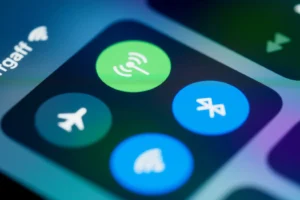
Modern prescription devices act as wireless media hubs, seamlessly integrating with your everyday digital devices:
- Direct Audio Streaming: Today’s Bluetooth hearing aids connect directly to iPhones, most Android smartphones, and tablets. You can stream phone calls, audiobooks, podcasts, and music straight into your ears with crystal-clear fidelity.
- Smartphone App Control: Dedicated smartphone applications allow you to adjust volume levels discreetly, change programs for specific environments, or check battery health directly from your screen.
- Next-Generation Bluetooth (LE Audio & Auracast): The newest Bluetooth standards offer improved energy efficiency and support broadcast audio technology. In public venues like theaters or airports, Auracast will allow public address systems or audio tracks to stream directly into compatible hearing aids when it becomes available.
The Rise of Rechargeable & ‘Invisible’ (IIC) Hearing Aids
Form factor and power options have evolved significantly to fit diverse physical needs and lifestyle preferences:
Rechargeable Power
Lithium-ion rechargeable batteries are now the industry standard for most Receiver-in-Canal (RIC) and Behind-the-Ear (BTE) models. A simple overnight charge in a portable charging case provides 18 to 24 hours of continuous use—eliminating the need to manipulate tiny disposable button batteries.
Invisible-in-Canal (IIC) Devices
For individuals who prioritize discretion above all else, Invisible-in-Canal (IIC) hearing aids are custom-molded to sit deep within the ear canal. Hidden past the second bend of the ear, they remain virtually invisible to outside observers while utilizing the natural anatomy of your outer ear to collect sound.
Over-the-Counter (OTC) vs. Prescription Hearing Aids
The introduction of OTC hearing aids created a new purchasing option for consumers, but it is essential to understand how these devices differ from medical-grade prescription technology:
| Feature | OTC Hearing Aids | Prescription Hearing Aids |
| Intended Hearing Loss | Self-perceived mild-to-moderate only | Mild, moderate, severe, or profound |
| Diagnostic Requirement | None (self-assessed) | Comprehensive audiometric testing |
| Fitting & Customization | Self-fit via smartphone apps / presets | Fit to you by a Doctor of Audiology to ensure a good physical fit as well as appropriate programming based on your specific hearing loss. |
| Clinical Verification | Not included | Real Ear Measurements (REM) gold standard |
| Specialized Pathologies | Cannot accommodate complex ear conditions | Tailored for complex loss, tinnitus, & balance issues |
While OTC hearing aids can provide an accessible entry point for adults with mild hearing changes, they lack the diagnostic precision and acoustic output required for moderate-to-severe loss or complex ear anatomy.
What’s Next in Hearing Aid Technology?
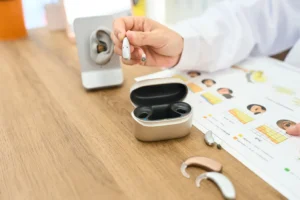
The future of hearing health extends beyond speech clarity. Upcoming innovations continue to blur the line between hearing assistance and holistic health monitoring:
- Embedded Health & Safety Sensors: Modern devices are incorporating sensors that track daily steps, monitor heart rate, and detect physical falls, automatically alerting loved ones in an emergency.
- Advanced Tinnitus Management: Integrated sound generators continuously evolve to provide customized, soothing acoustic masking for patients managing chronic ear ringing. You can learn more about these specialized protocols by reviewing our tinnitus management services.
Why Professional Fitting Matters More Than Ever
Even the most advanced, AI-powered hearing aid is only as effective as the diagnostic data used to program it. Hearing aids are not off-the-shelf consumer electronics; they are medical instruments that must be precisely calibrated to the unique physical shape of your ear canal and your exact hearing loss and perception of sounds.
At Jacksonville Hearing & Balance Institute, our Doctors of Audiology utilize clinical gold standards to measure the exact sound output at your eardrum to verify that your hearing aids deliver safe, clear, and perfectly customized amplification.
To learn more about our clinical standards and comprehensive diagnostic testing, read about why to see a specialized audiologist or explore our complete hearing testing services.
Frequently Asked Questions (FAQ)
There is no single “best” hearing aid for every individual. The ideal device depends on your specific degree of hearing loss, physical ear canal shape, lifestyle demands, budget, and technological preferences. A Doctor of Audiology evaluates your diagnostic results to recommend the most suitable medical-grade options for your needs.
With routine cleaning, proper maintenance, and regular clinical check-ups, high-quality prescription hearing aids typically last between 6 and 8 years. Over time, physical wear and changes in your hearing profile or software capabilities may warrant an upgrade.
Yes. Prescription hearing aids are one of the most effective management tools for tinnitus. By cleanly amplifying background environmental sounds, they restore proper stimulation to the auditory nerve, naturally reducing the brain’s focus on internal ringing. Many devices also feature built-in sound therapy generators.
Experience the Gold Standard in Hearing Care
Navigating modern hearing technology is simpler when you have an expert guiding your care. If you are ready to explore the best hearing aids for your lifestyle, our team of specialists at Jacksonville Hearing & Balance Institute is here to help you experience clear, effortless communication.
For further reading and downloadable resources, feel free to browse our library of patient educational material.