
Tinnitus means hearing sounds that are not coming from outside your body, while vertigo is the feeling that you or your surroundings are spinning when you are actually still. These symptoms often start in the inner ear, where the hearing and balance organs are located close together and share fluid and nerve connections. Because of this, a problem in one area can affect the other. Conditions like Ménière’s disease, labyrinthitis, and benign paroxysmal positional vertigo can cause ringing, spinning, or both. At Jacksonville Hearing & Balance Institute (JHBI), we investigate these symptoms by reviewing your medical history, examining your ears, and running hearing and balance tests to identify the cause. Treatment depends on what is found and may include special head movements, balance exercises, sound therapy, hearing aids, or medication.
What Is Tinnitus and Why Does It Happen?
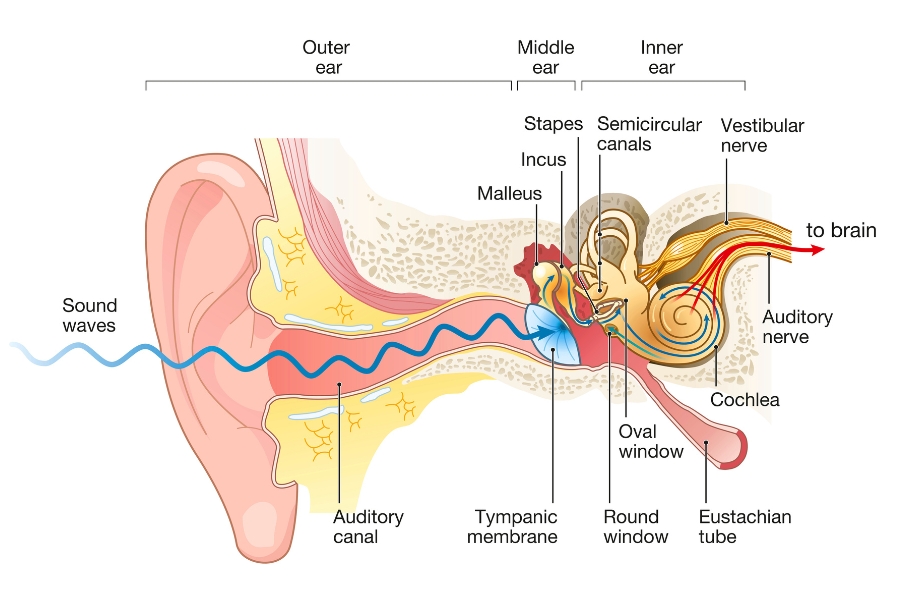
Tinnitus is not a disease itself, but a symptom that signals something is happening in your hearing system. People often describe it as ringing, buzzing, roaring, humming, clicking, or hissing. It can be heard in one ear, both ears, or even seem to come from inside your head. For some, it is a quiet background noise, while for others, it can be loud enough to make sleeping or focusing difficult. If tinnitus lasts for three months or more, it is called chronic.
The symptom is widespread. According to hearing and balance statistics from the National Institute on Deafness and Other Communication Disorders, roughly 10% of American adults, about 25 million people, have experienced tinnitus lasting at least five minutes in the past year.
Factors linked to tinnitus include:
- Noise exposure from concerts, firearms, machinery, or the workplace
- Hearing loss from aging or from damage to the inner ear
- Earwax blocking the ear canal, or fluid from an ear infection
- Certain medications, including some antibiotics and high doses of common pain relievers
- Head or neck injuries that affect the ear or the hearing nerve
- Blood vessel conditions, including high blood pressure
Sometimes, tinnitus happens without a clear reason. Most people with tinnitus also have some hearing loss, which is why a hearing test is usually included when checking these symptoms.
What Is Vertigo and How Is It Connected to the Inner Ear?
Vertigo is a type of dizziness in which you feel like you are spinning or tilting, even though you are not moving. Other types of dizziness can feel like lightheadedness, faintness, or floating. It is important to tell the difference when figuring out what is wrong.
The inner ear contains the vestibular system, which helps your brain know how your head is moving and where it is positioned. Three semicircular canals filled with fluid sense rotation, while two other parts, called the utricle and saccule, sense gravity and straight movements. If these parts or their nerve signals are disturbed, your brain gets mixed messages about movement, which can cause vertigo.
Balance complaints are common. The NIDCD balance disorders resource reports that about 15% of American adults, roughly 33 million people, have had a balance or dizziness problem.
Why Do Tinnitus and Vertigo Often Happen Together?
Tinnitus and vertigo often happen together because the cochlea, which is the hearing organ, and the balance organs are both found in the same part of the inner ear. They share the same fluid and connect to the brain through the same nerve. So, if something affects one, it can easily affect the other.
Several conditions produce both symptoms:
Ménière’s disease. Episodes of spinning vertigo lasting 20 minutes to 12 hours, fluctuating hearing loss, tinnitus, and a sense of fullness in the affected ear characterize Ménière’s disease. Symptoms are associated with a buildup of inner ear fluid known as endolymphatic hydrops, though the underlying cause is unclear. One ear is usually affected.
Labyrinthitis and vestibular neuritis. Inflammation of the inner ear or its nerve, often after a viral infection, causes sudden, prolonged vertigo. Labyrinthitis involves the hearing side as well, so it can bring hearing loss and tinnitus. Vestibular neuritis affects the balance nerve and typically leaves hearing intact, which is the practical difference between the two.
Benign paroxysmal positional vertigo (BPPV). Brief, intense bursts of vertigo triggered by rolling over in bed, bending down, or tipping the head back point toward BPPV. Tiny calcium crystals called otoconia drift out of place into a semicircular canal and disturb the signal the canal sends. BPPV is one of the most common causes of vertigo and does not typically cause ringing, so tinnitus alongside positional vertigo suggests a second issue worth investigating.
How Are Tinnitus and Vertigo Evaluated?

The first step in checking these symptoms is to take a careful medical history and examine the ear canal and eardrum. Sometimes, a blockage, infection, or medication can explain the symptoms, so providers check these before doing more tests.
At Jacksonville Hearing & Balance Institute, a provider reviews the history and clinical findings and then orders diagnostic testing if an inner ear disorder appears likely. Balance testing and treatment at JHBI includes videonystagmography, which compares vestibular function between the right and left ear; rotational chair testing, which measures how well the eyes stay fixed during head movement; vestibular evoked myogenic potential testing; computerized dynamic posturography, which gauges fall risk; and electrocochleography, which is used to look for excess inner ear pressure and to help confirm Ménière’s disease. Hearing testing runs alongside this work, since the auditory results often point to the cause.
What Treatments Help Reduce Tinnitus and Vertigo Symptoms?
Treatment depends on the diagnosis and can be as simple as a one-time procedure in the office or may involve ongoing care. While there is no cure for primary tinnitus, several approaches can make it less bothersome.
- Canalith repositioning. For BPPV, a clinician guides the displaced crystals out of the affected canal using a series of head and body movements such as the Epley maneuver. Many people need one session, and others need the procedure repeated.
- Vestibular rehabilitation. Specific exercises help the brain recalibrate to altered balance signals, which is useful after neuritis or labyrinthitis and for chronic unsteadiness.
- Sound therapy. Wearable and tabletop sound generators add low-level external sound so the brain gives less attention to the internal noise. The clinical practice guideline on tinnitus from the American Academy of Otolaryngology-Head and Neck Surgery Foundation states that clinicians may offer sound therapy for persistent, bothersome tinnitus.
- Hearing aids. Amplification makes external sound easier to hear and tends to make tinnitus less noticeable. The same guideline recommends a hearing aid evaluation when persistent, bothersome tinnitus accompanies documented hearing loss.
- Cognitive behavioral therapy. Structured counseling changes how a person responds to the sound and is the guideline’s recommendation for persistent, bothersome tinnitus.
- Medical management. Depending on the diagnosis, a physician may address dietary salt, prescribe a diuretic, treat acute nausea during vertigo attacks, or use corticosteroids or other medications for inflammation and fluid problems.
Frequently Asked Questions
Can stress make tinnitus and vertigo worse?
Stress and anxiety often make tinnitus feel worse, and being more upset can make the sound harder to ignore. Studies also show that people with tinnitus are more likely to have anxiety and depression, which is why counseling is a regular part of tinnitus treatment.
Is vertigo permanent?
Most causes of vertigo can be treated once they are found. BPPV usually gets better with one or a few repositioning treatments. Vertigo from neuritis or labyrinthitis often improves as the inflammation goes away and the brain adjusts. Ménière’s disease cannot be cured, but its attacks can often be controlled. Some people still have dizziness and may need ongoing balance therapy.
When should I see an ear specialist about ringing or dizziness?
You should see a specialist if your tinnitus is always present, happens in just one ear, or comes with dizziness, sudden hearing changes, ear pain, or a feeling of fullness. If you suddenly lose your hearing, get help immediately, as this is an emergency.
Key Takeaways

- Tinnitus is sound perceived without an external source; vertigo is a false sense of spinning or tilting.
- Hearing and balance organs share the inner ear labyrinth, so one problem often produces both symptoms.
- Ménière’s disease, and labyrinthitis commonly cause both symptoms.
- BPPV causes positional vertigo without ringing, so tinnitus with positional vertigo points elsewhere.
- Diagnosis rests on history, ear examination, hearing testing, and vestibular testing.
- Repositioning maneuvers, vestibular rehabilitation, sound therapy, hearing aids, counseling, and medication each address different causes.
If you have ringing in your ears that will not go away or dizziness that keeps coming back, it is a good idea to see a specialist. Call Jacksonville Hearing & Balance Institute at (904) 399-0350 to make an appointment with our team.